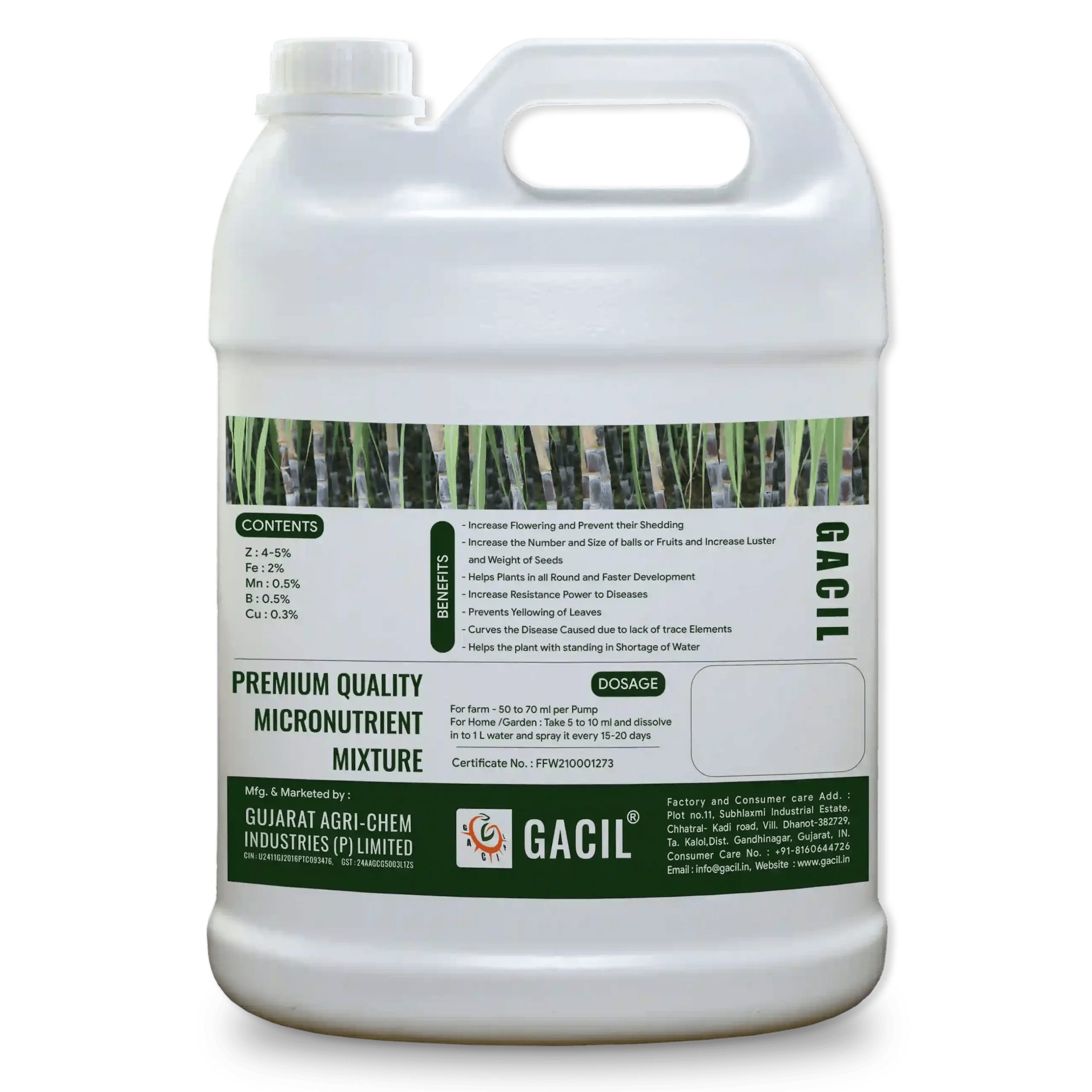


Description Sugarcane Special liquid Micronutrient fertilizer Sugarcane is a long-duration, high-biomass crop that extracts massive amounts of nutrients from the soil. While basal NPK applications drive bulk growth, the actual sucrose yield (Brix), stalk integrity, and disease resistance are heavily dictated by micronutrients.A specialized liquid multi-micronutrient formulation is the most efficient way to bypass soil lock-up—a common issue in alkaline or calcareous soils—delivering nutrients directly through the foliage for rapid absorption. Application & Dosage First Spray (Tillering Phase - 45 to 60 days): At this stage, the primary goal is establishing a dense stand. The Zinc and Iron in the formulation push aggressive tiller development and early canopy formation. Second Spray (Grand Growth Phase - 90 to 120 days): The cane is elongating rapidly. Manganese and Copper support structural integrity and maximize the photosynthetic rate required to build stalk mass. Third Spray (Early Maturity - 150 days): As vegetative growth slows, Boron becomes the priority. A late-stage spray accelerates the translocation of carbohydrates into the stalk, maximizing the final Brix percentage before harvest.MicronutrientVisual Deficiency Symptom in SugarcaneImpact if Left UntreatedZincPale yellow/whitish bands near the base of young leaves.Stunted internode length and severely reduced tillering.BoronDistorted growing tips, water-soaked lesions, or hollow stalks.Low sucrose recovery rate and brittle canes.IronInterveinal chlorosis (yellowing between green veins on new leaves).Reduced photosynthesis and weak overall vigour.ManganeseFaded green to whitish longitudinal stripes on the mid-leaf.Poor nitrogen utilization and reduced enzyme activity.CopperDrooping or wilting of the top leaves without water stress.Weak stalks prone to lodging and fungal infections. Benefits correct and prevent deficienciesLiquid formulations provide a quick and effective way to address existing nutrient shortages, which can cause symptoms like yellowing leaves (chlorosis), stunted growth, and poor flowering. Moreover, by supplying a balanced mix, they proactively prevent such deficiencies from occurring in the first place.Improved nutrient balanceThe presence of a full suite of micronutrients can, in fact, enhance the uptake and utilization of macronutrients, thereby leading to more robust overall plant nutrition.Enhanced growth and yieldFinally, a well-nourished plant boasts greater disease and stress resistance. A plant with balanced nutrition is inherently better equipped to withstand environmental stresses such as drought, temperature fluctuations, and attacks from pests and diseases.VersatilityIn terms of application, a key advantage is rapid absorption. Being in a liquid form, these fertilizers are quickly absorbed by either the plant's roots (through soil drenching) or its leaves (through foliar spraying). Consequently, this allows for a swift response and correction of any nutritional imbalances. Things to Consider 01Nutrient compositionCheck the specific micronutrients included in the mixture and verify it aligns with your plants' needs. Some popular micronutrients in these blends include iron, manganese, zinc, copper, boron, and molybdenum.02Application ratesAlways follow the instructions on the product label for proper dilution and application frequency to avoid overfertilization.03Plant compatibilityCertain plants might be sensitive to specific micronutrients. Research the appropriate blends for your plant types.04Soil testingWhile helpful, micronutrient mixture fertilizers might not address underlying soil deficiencies. Consider soil testing to determine specific nutrient needs for targeted solutions.
Related products

DOG BOWLS & FEEDERS
$ 14.15

DOG BOWLS & FEEDERS
GACIL® Zinc Sulphate Monohydrate 33% Water Soluble Micronutrient Fertilizer 100 g
$ 2.26



DOG GROOMING
$ 92.87

DOG GROOMING
$ 91.43

DOG BOWLS & FEEDERS
$ 91.14

DOG BOWLS & FEEDERS
AgriOne Special Betel Fertilizer: For Lush, High-Quality Leaves
$ 92.87